Walk through any mattress showroom in Delhi NCR and you will hear a lot of technology words in a short space of time — gel, charcoal, carbon, infusion, zoning. Very little of it comes with an explanation of what the material is actually doing inside the mattress, which leaves buyers picking between claims rather than between products. Charcoal-infused foam is one of the more common of those terms right now, and it is worth understanding on its own before deciding whether it matters for the way you sleep.
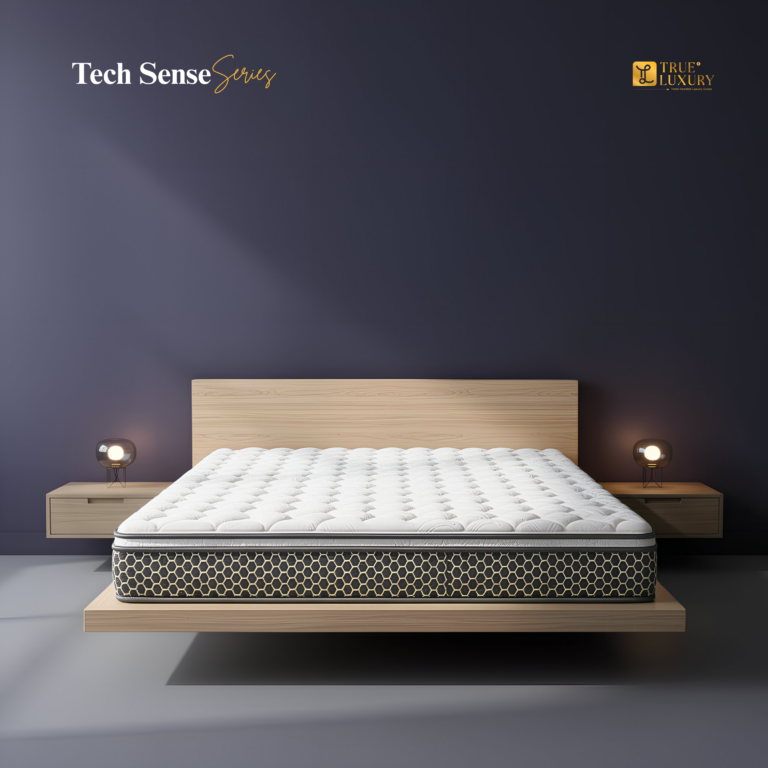
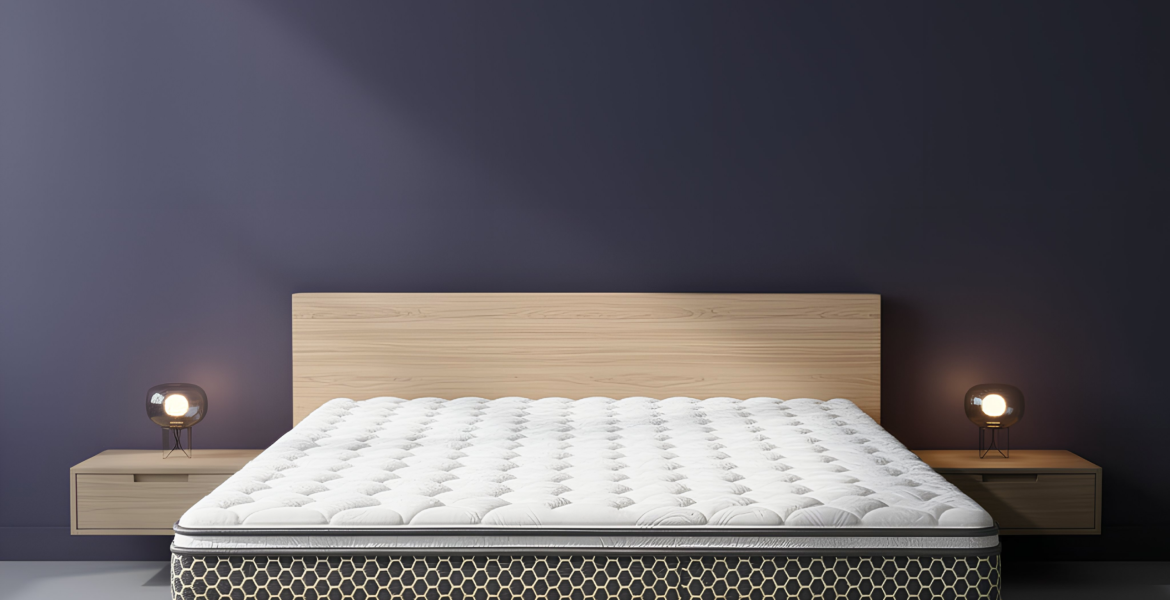
TrueLuxury’s Posture Sense, from the Tech Sense Series, is a useful mattress to examine here, because charcoal is not a garnish on the spec sheet — it sits in the core.
What charcoal-infused foam is, in plain terms
Ordinary polyurethane foam is a closed system of air pockets. An infused foam is the same base material with a fine solid additive mixed into it during manufacture, so the additive is distributed through the block rather than coated on the surface. That distinction matters more than the additive itself: a surface treatment wears off with use and washing, while an infusion stays where the foam is.
Posture Sense uses charcoal-infused high-resilience foam as its core material. High-resilience foam is the denser, springier grade of PU foam — it recovers its shape quickly instead of holding an impression, which is why it is used for support layers rather than pillow-soft top layers. TrueLuxury lists the practical benefit of the charcoal element as enhanced freshness, and that is the honest way to frame it. A mattress absorbs body moisture every night for years. Anything that helps the mattress stay fresher over that span is a durability and hygiene question, not a medical one — and it is fair to be sceptical of anyone selling you charcoal as a health treatment rather than as a material choice.
The support story matters more than the additive
For most buyers, the more consequential specification on Posture Sense is not the charcoal at all. It is the support geometry. The mattress is built as an orthopaedic design with S-curve spine alignment — meaning the surface is engineered to hold the natural curve of the spine rather than flatten it or let the midsection sag.
This is the part that decides whether you wake up comfortable. A spine in its neutral shape is not straight; it curves at the neck and the lower back. A mattress that is too soft lets the hips drop below that line, and one that is uniformly hard leaves the lumbar region unsupported in the air. An S-curve orthopaedic construction aims at the middle of those two failures.
Sitting above the core are multi-layer quilted memory foam comfort layers, finished in a spun yarn heavy GSM fabric. Heavy GSM matters for a reason that is easy to overlook in a showroom: the top fabric takes the friction of every night’s movement, and a thin cover is usually the first part of a mattress to look tired. TrueLuxury also specifies high airflow construction, which is the practical answer to a real Indian problem — foam mattresses that hold warmth through May and June.
Who this mattress is designed for
TrueLuxury positions Posture Sense for back and spine support, posture correction, long sleep hours, and premium home use. Read past the marketing framing and a specific profile emerges: someone who spends a long stretch of the night in one position, on their back or side, and who wants firm structural support without an unforgiving surface.
Two details help buyers who are unsure of their firmness preference. First, the mattress is a one side soft, one side hard construction — two usable feels in a single purchase, which is genuinely useful if you are buying without having slept on the product. Second, it is available in 6-inch, 8-inch and 10-inch thicknesses. Thickness is not a proxy for quality, but it does change how much comfort layer sits above the support core. A heavier sleeper generally has a better experience on the thicker options, simply because there is more material between the body and the base.
TrueLuxury lists an 11-year manufacturing warranty on this model. As with any mattress warranty in India, read what it covers before you treat it as a headline number — manufacturing warranties typically address defects in construction, not the gradual softening that comes from normal use.
How to judge a technology claim before you buy
The useful habit is to separate the two questions a mattress has to answer. The first is structural: what holds your body up, and how firm is it. The second is material: what the surfaces and infusions do for temperature, freshness and longevity. Almost every buying mistake comes from letting an answer to the second question stand in for the first.
On Posture Sense, the structural answer is high-resilience orthopaedic foam with an S-curve alignment design, and the material answer is charcoal infusion plus a high-airflow build. Both are stated on the product page rather than implied, which is the standard worth holding any mattress to. If a seller cannot tell you what is under the fabric and what firmness it produces, the technology name on the label is not the thing to trust.
You can see the full specification for Posture Sense on the TrueLuxury store, alongside the rest of the Tech Sense Series.