Most mattress comparisons in India end up being comparisons of adjectives. One model is premium, the next is luxury, a third is orthopaedic, and a buyer standing between them cannot tell whether the difference sits in the foam or in the brochure. The useful comparison is narrower than it looks. On a range that documents itself properly, two lines on the specification sheet carry most of the information you need: what the mattress is layered with, and how long it is warranted for.
TrueLuxury publishes both for nearly every model, which makes the range a workable example whether or not you end up buying one. The question worth asking is not which series is best, but how much construction your bed actually needs — and where extra construction stops changing how you sleep.
What a layer list is really telling you
Foam layers are not interchangeable, and a longer list is not automatically a better mattress. Each layer does a specific job, and reading them from the bottom up tells you how the mattress will behave under you.
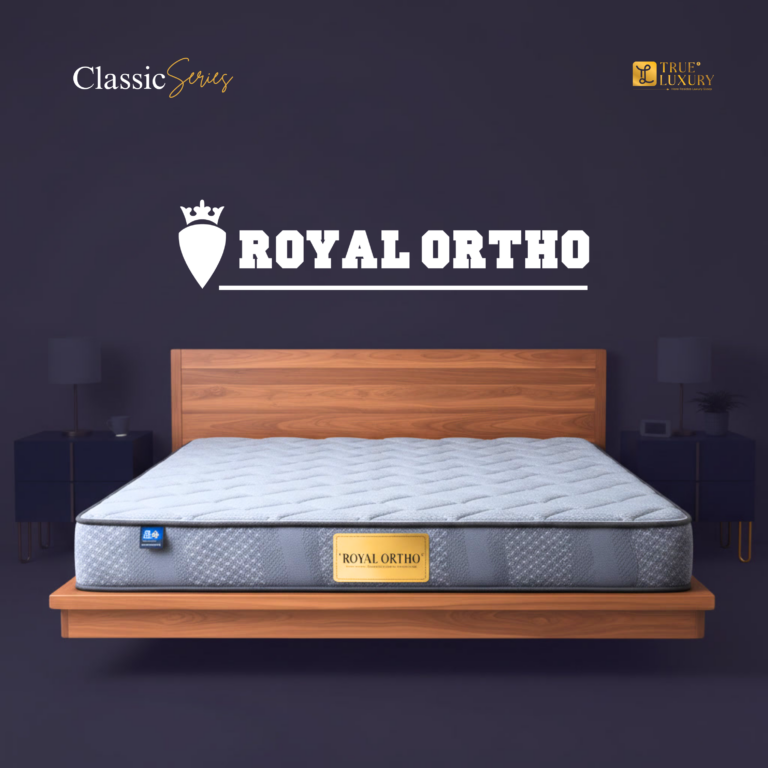
Take the Royal Ortho from the Classic Series. TrueLuxury lists it as bonded foam with quilted PU foam over it — a dense structural base and a quilted comfort surface, nothing in between. It is rated Medium-Firm with ortho support — a deliberately direct construction, with no intermediate layer softening the transition between base and surface.
Move across to Silver Bond or Golden Leaf and a third element appears: high density foam sits between the bonded core and the quilted top. The Zeta Luxury in the Expert Series uses high density HR foam in that middle position, and the Posture Pedic in the Wealthy Series pairs soft HR foam with a memory quilted PU surface above a bonded base.
The pattern holds across the range. What changes between series is rarely the presence of support — bonded or rebonded foam does the structural work almost everywhere — but how gradually the mattress hands you over to it. More layers means a longer gradient between the surface you touch and the core that holds you, and whether that gradient is worth having depends on your body and sleeping position, not the name on the label.
Warranty is the more honest durability signal
Layer counts describe feel. Warranty length is the closer proxy for how long a manufacturer expects its own materials to hold their shape, and across this range it spreads widely enough to be informative.
Royal Ortho and Silver Bond are listed at five years. Golden Leaf and the Galaxy Plus carry seven. The spring models in the Expert Series, Bonnel Spring and Pocket Spring, are listed at eight. Float and the firmer Spine Therapy models including Grand sit at ten, and the Wealthy Series, Zeta Luxury and the Smart Hybrid models reach eleven.
Read that as a statement about materials, not a guarantee about comfort. A warranty period is not a promise that the mattress feels identical in year nine, and terms vary, so check what a specific warranty covers before treating the number as decisive. What the spread tells you is that the denser foams and spring systems higher in the range are backed for roughly twice as long as the simplest builds — which matters greatly for a bed slept on nightly, and far less for one used a few weeks a year.
The upgrades that change your night — and the ones that do not
Some differences across the range are changes in function rather than refinements of feel, and they matter only if they answer a problem you actually have.
Motion isolation is the clearest example. The Pocket Spring model uses individually wrapped springs to limit motion transfer across the bed. If you share a bed with someone who turns often, that is a functional difference. If you sleep alone, it is not.
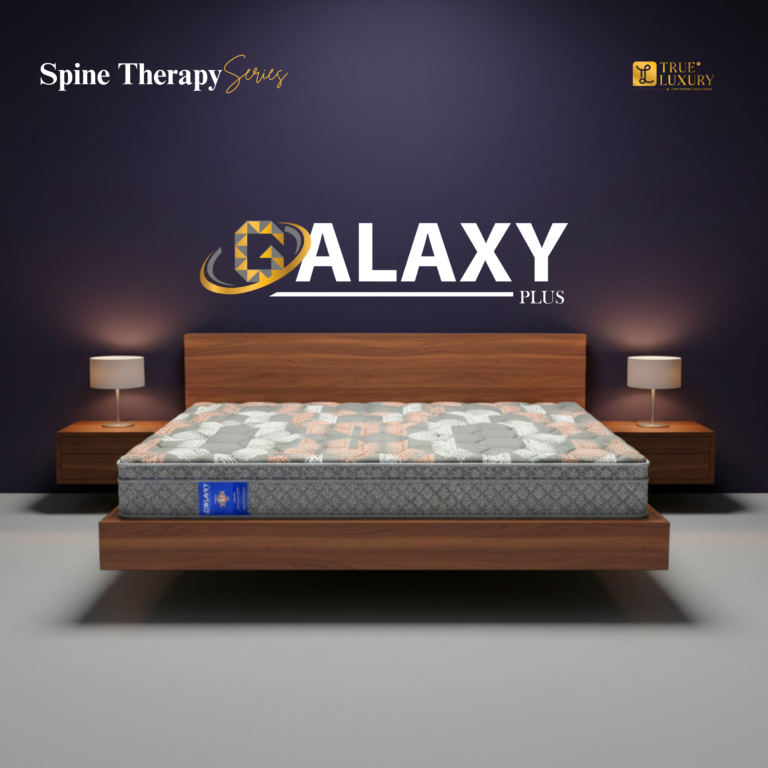
Firmness is the difference most often misread as a ladder. It is not. Grand and Galaxy Deluxe are both listed as Firm orthopaedic builds, while Galaxy Plus in the same Spine Therapy Series is a Medium with a Euro Top finish. A firmer mattress further along the range will not suit a side sleeper simply because it is more elaborately built. Match firmness to how you sleep first, and treat everything else as a secondary decision.
Surface construction is where extra layers earn their keep for most people. A Euro top or memory quilted surface gives soft first contact while a dense base underneath does the structural work — useful if you want a plush feel without the sag a uniformly soft mattress develops. In the Tech Sense Series, thickness itself is a listed option at six, eight or ten inches, worth checking against your body weight and the bed frame you already own.
Match the build to how the bed is actually used
The most practical way to narrow the range is to think about the bed rather than the buyer. A guest room used a dozen nights a year, a hostel or PG bed, or a spare-room mattress does not need a five-layer build; a simpler two- or three-layer construction in a Medium or Medium-Firm rating is doing exactly what it was designed to do. TrueLuxury lists Royal Ortho across that spread of uses, from homes through hostels and PGs.
A main bed slept on seven or eight hours a night is the opposite case. There a longer warranty, a denser core and a more gradual comfort gradient stop being luxuries and become the difference between a mattress that lasts and one that dips under your hip by the third year. Sizes run Single, Queen, King and custom B2B dimensions, so an unusual frame is rarely the constraint buyers expect.
The honest summary is that more build is not better build — it is more specific build. Work out what your bed has to do, read the layer list and the warranty rather than the adjective, and buy the construction that answers it.