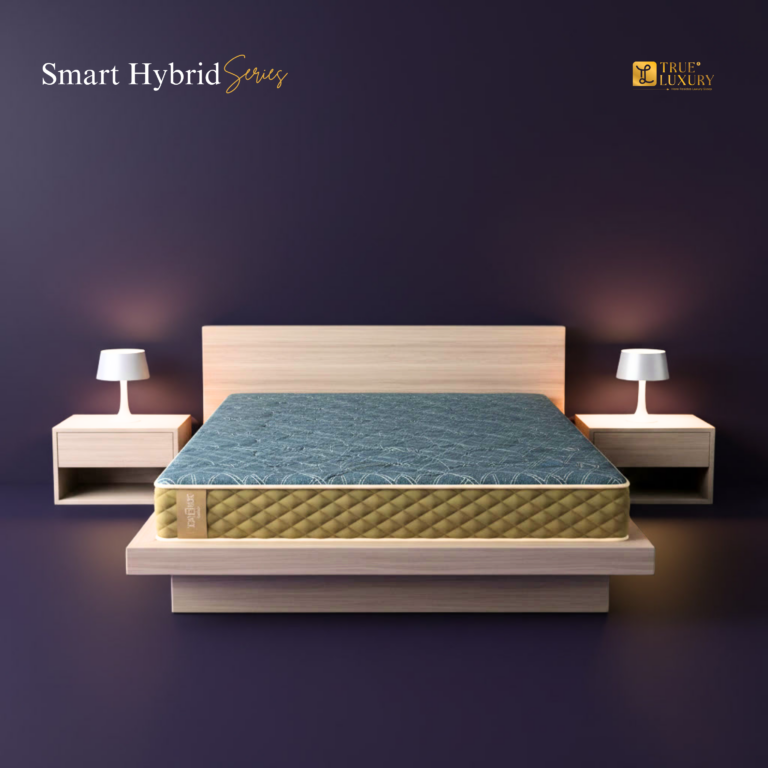
India’s relationship with sleep is changing fast — and so is the mattress industry built around it. What used to be a purely functional, once-in-a-decade purchase has turned into a considered, research-heavy buying decision, with consumers comparing materials, warranties, and firmness options the way they once compared smartphones. Here’s a look at where the Indian mattress market stands in 2026, and what’s driving the shift.
A Market on a Steady Growth Curve
Industry research places India’s mattress market in the range of roughly USD 2.3 to 2.6 billion in 2026, with analysts projecting continued growth at a compound annual rate of around 8-9% through the early 2030s — a pace that would take the market well past the USD 4 billion mark within the next several years. That growth is being driven by rising disposable incomes, rapid urban housing expansion, and a fast-growing hospitality sector, all of which are pushing demand for better sleep surfaces across price segments.
Why Indians Are Spending More on Sleep
Three forces are reshaping how Indian households think about mattresses:
- Rising health consciousness — sleep quality is increasingly discussed alongside diet and exercise as a pillar of overall health, and consumers are more willing to invest in a mattress that actually supports better rest.
- Urbanisation and housing growth — as more households move into new homes and apartments, mattress replacement and first-time purchases are rising in tandem with real estate expansion.
- Corporate and hospitality demand — hotels, serviced apartments, and co-living spaces are scaling up rapidly, and each new property represents a bulk mattress order built around durability and consistent quality.
The Shift to Online and Omnichannel Buying
One of the most significant changes in the last few years is where mattresses are actually bought. Online channels now account for a substantial and growing share of mattress sales in India — some estimates put online penetration at well over 40% of the market. Direct-to-consumer brands have played a big role here, popularising home trial periods, doorstep delivery, and transparent pricing that traditional retail simply didn’t offer.
That said, offline experience hasn’t disappeared — it’s evolved. Buyers increasingly research and shortlist mattresses online, then still want to physically feel the firmness and material before finalising a big-ticket purchase. The winning strategy for most brands today is omnichannel: a strong online presence backed by the ability to test the product in person.
What Buyers Are Actually Choosing
Material preference has shifted noticeably. Foam-based mattresses — memory foam in particular — have become the largest category by revenue, prized for their pressure relief and orthopedic positioning. At the same time, demand for customisation is rising fast: buyers want a specific firmness, a specific size, and increasingly, a specific combination of materials layered into one mattress rather than a single-material product.
Replacement cycles are also shortening. While many Indian households have traditionally kept a mattress for 8-10 years, a growing share of consumers — roughly a third, by some estimates — now plan to replace their mattress within just two years of a prior purchase, reflecting both rising awareness of hygiene and support degradation, and simply higher expectations of comfort.
What This Means for Buyers in 2026
For consumers, this growth and competition is good news: more material choices, more transparent trial and warranty policies, and mattresses genuinely engineered for Indian climates — layouts that manage humidity and heat far better than the imported designs of a decade ago. The market has matured to a point where “just a mattress” is no longer good enough; buyers now expect a product backed by real material science, a fair trial period, and support tailored to how they actually sleep.
As the market continues its climb toward the multi-billion-dollar mark over the next few years, the brands that win will be the ones that treat sleep as health infrastructure — not just a piece of furniture.