Some mornings the problem is not how long you slept. It is the dull ache in one shoulder, the hip that carried your body weight for six hours, the arm that went numb at 3 am. That is a pressure problem, and extra hours in bed do not fix it. It is decided in the two inches where your body meets the mattress.
Pressure relief gets confused with softness, and the two are not the same. A mattress can be soft and still leave you sore. Another can feel firm under your palm and still cradle a shoulder properly. Understanding that difference is what stops you from buying the wrong mattress twice.
What pressure relief actually means
Lie on your side and your body does not touch the bed evenly. Your shoulder and hip stick out further than your waist, so they carry a disproportionate share of your weight over a small contact area. If the surface underneath does not yield at those two points, blood flow to the area is restricted, the nerves complain, and your body solves it the only way it can: by rolling over. Do that fifteen times a night and you have technically slept eight hours while barely reaching deep sleep at all.
A mattress that relieves pressure lets the shoulder and hip sink in while continuing to push back under the waist and the lower back, which are not sinking as far. The surface has to be responsive in two directions at once. That is a materials problem, not a firmness-rating problem, which is why two mattresses labelled “medium” can behave completely differently.
Why layer construction matters more than the label
Look past the firmness word on the tag and read the layer stack. That tells you how the mattress will behave.
Profile cutting foam is foam whose top surface has been cut into a contoured, undulating profile rather than left flat. The raised sections carry load while the valleys stay free, so the sheet flexes independently in small zones. A shoulder pressing into it compresses the section directly under it without dragging the whole slab down. Flat foam of the same density cannot do that — it behaves more like a single panel.
High resilience foam, usually written as HR foam, sits below and does the opposite job. Resilience here refers to how quickly and completely the foam returns to shape after load. A high resilience layer pushes back steadily instead of slowly collapsing, which is what keeps the midsection from sagging while the shoulder is allowed to sink. Pair the two and you get the behaviour described above: give where the body protrudes, support where it does not.
On top sits the quilted layer, which is what your skin actually meets. Quilted polyurethane foam under a plush knitted fabric softens the initial feel of the surface.
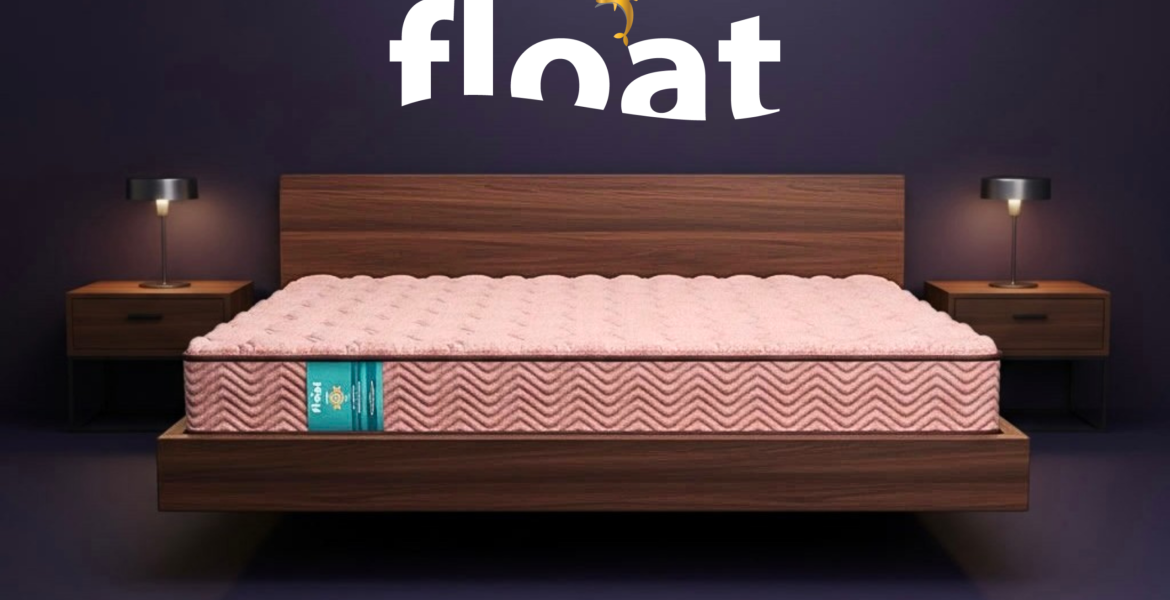
The Float mattress in the TrueLuxury Classic Series is built on exactly this stack — profile cutting foam over HR foam, finished with quilted PU foam and a plush knitted fabric. It is rated medium in firmness, and its stated design intent is pressure relief rather than orthopaedic firmness. That is a meaningful distinction when you are comparing it against a firmer ortho model in the same series: they are solving different problems, and neither is an upgrade of the other.
Who this kind of mattress suits
Side sleepers are the clearest case. The shoulder-and-hip geometry described earlier is a side sleeping problem above all, and a contoured surface addresses it directly. Combination sleepers who start on their side and drift onto their back through the night usually do well too, because a responsive surface lets them change position without fighting the mattress.
Lighter sleepers often find firm mattresses punishing for the same reason. If you do not weigh enough to compress a firm surface, you lie on top of it rather than in it and the contact area stays small. A medium, contoured surface gives you somewhere to settle.
Who should think twice: strict stomach sleepers, who generally need the hips held higher rather than allowed to sink, and anyone who has been specifically advised toward a firmer orthopaedic surface. If you are dealing with persistent back pain, that is a conversation for a doctor or physiotherapist before it is a shopping decision. A mattress can support good alignment; it is not a treatment.
What to confirm before you buy
A few practical checks are worth making for any mattress in this category, not just this one.
- Confirm the actual layer stack in writing. “Pressure relieving” is marketing language. Profile cut foam plus a resilient support layer is a specification. Ask for the second.
- Check size availability against your bed frame before anything else. Float is listed in single, queen and king, with custom sizes available for B2B buyers such as hotels and hospitality projects — useful if you have a non-standard frame, and worth asking about rather than assuming.
- Ask what the cover is. A plush knitted fabric behaves differently from a tightly woven one in terms of stretch and surface feel, and it is part of how the mattress reads in the first ten seconds.
- Register the product. Every TrueLuxury mattress carries a unique QR code used for originality verification and warranty registration. Scanning it at delivery takes a minute and is the only reliable way to confirm you received a genuine unit. Float carries a 10-year warranty, and registration is what makes that warranty usable later.
A closing note on trial time
Do not judge a new mattress in one night. Your body has adapted to whatever you were sleeping on, sags included, and needs a week or two to recalibrate. Some stiffness in the first few nights is normal and usually settles. What should not persist is the specific pressure ache — the shoulder, the hip, the numb arm. If that is still happening after two weeks, the surface is genuinely wrong for your body and no amount of adjusting will change it.