Most buyers in India spend three weekends comparing mattresses — firmness, spring type, foam density, finish — then pick up a pillow in the last two minutes at the counter. It is an odd split of attention, because the two divide the work of a night’s sleep between them. The mattress carries your hips, shoulders and back. The pillow handles everything above the shoulders. Get one right and the other wrong, and you can still wake up stiff.
A pillow’s job is narrower than most people assume, which is exactly why the wrong one is so noticeable. It fills the gap between your head and the mattress so that your neck continues the same line as the rest of your spine. Too thin, and your head tilts down toward the mattress. Too thick, and it is propped up at an angle you would never hold while standing. Either way, the muscles along the neck and shoulders spend the night holding a position instead of resting in one.
Loft and firmness decide more than the label does
Two words explain most pillow decisions: loft and firmness. Loft is height — how far the pillow lifts your head off the mattress. Firmness is how much it resists once your head is actually on it. They are related but not interchangeable. A tall, soft pillow can collapse to almost nothing under the weight of a head, ending the night lower than a shorter, firmer one that never gave way.
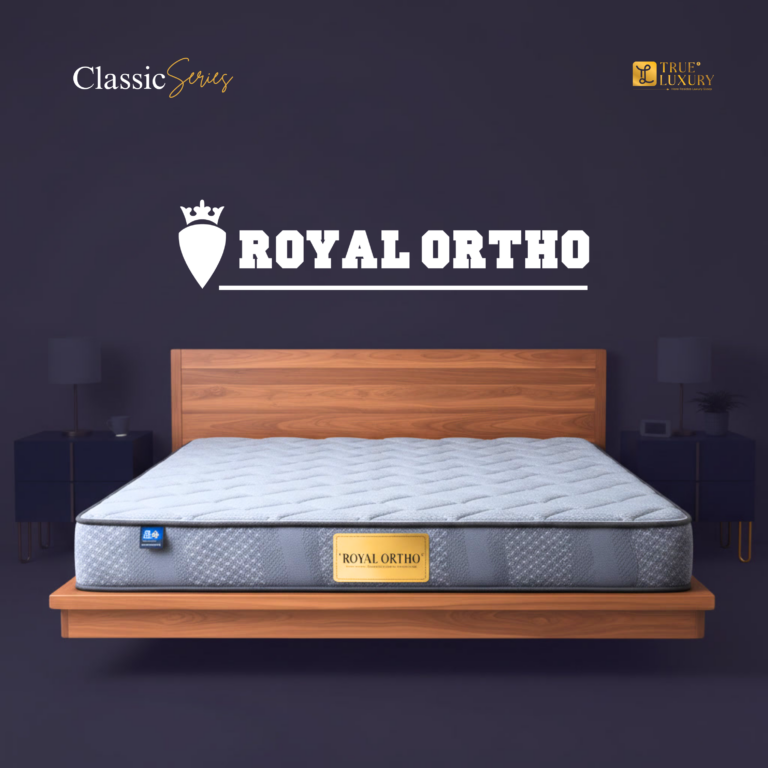
The gap you are filling is also not a fixed number. It depends on how broad your shoulders are and, less obviously, on the mattress underneath. On a firm orthopaedic mattress the shoulder stays close to the surface, leaving a wider gap for the pillow to bridge. On a softer surface with a plush top layer, the shoulder sinks in and that gap narrows. This is why a pillow that felt perfect at your parents’ house can feel wrong on your own bed: nothing about the pillow changed, only what sat underneath it.
Start with how you sleep, not how it feels in the shop
Pressing a pillow with your palm in a showroom tells you very little. Your sleeping position tells you almost everything.
Side sleepers have the widest gap to fill, roughly the distance from the outer shoulder to the ear. They generally want the highest loft, and enough firmness that the pillow has not flattened by midnight. Back sleepers need a medium loft — enough to support the natural curve behind the neck, not so much that the chin is pushed toward the chest. Stomach sleepers need the least of everything: the flattest, softest option available, because the head is already turned to one side and any extra height only adds to that rotation.
Few people are purely one type, and the position you fall asleep in is often not the one you wake up in. If you move between side and back, a medium-firm pillow at moderate loft beats committing to either extreme.
What the fill material actually changes
Fill decides how a pillow behaves across a full night rather than in the first five minutes. The TrueLuxury pillow range illustrates the differences cleanly, because each model commits to a single material rather than blending several.
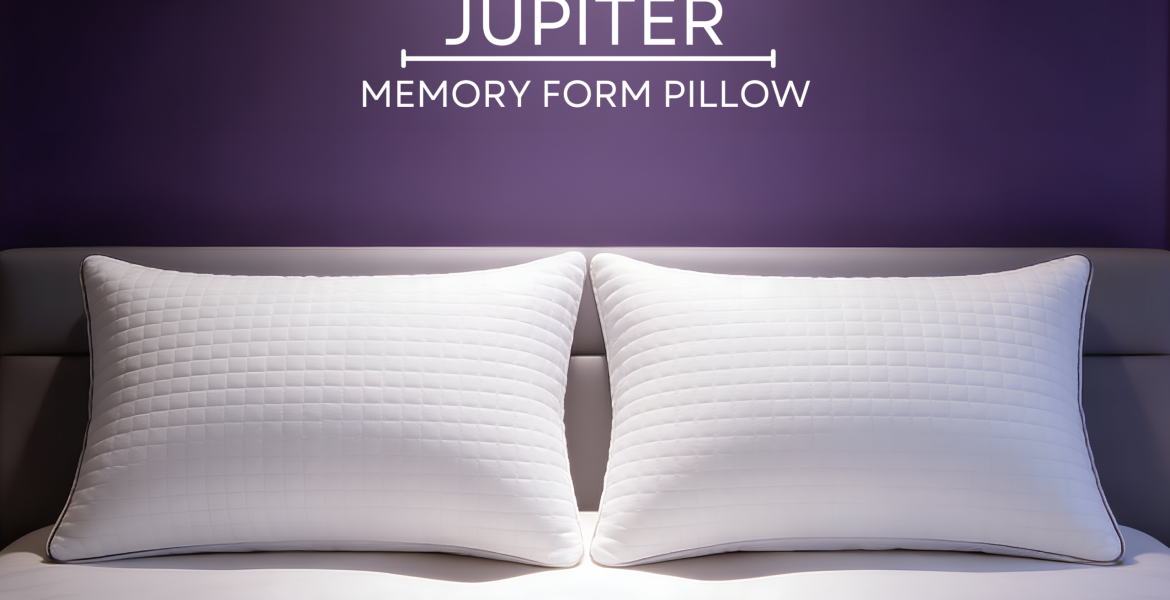
- Memory foam — the JUPITER uses high-density memory foam and is listed as medium-firm. It contours to the head rather than pushing back against it, and is described as shape retaining, so it does not need to be fluffed back into form.
- PU foam — MARS uses high-resilience PU foam at medium firmness. This behaves more like a spring than a mould: it returns to shape quickly and gives even, predictable support.
- Microfiber — VENUS is filled with ultra-fine microfiber and rated soft, under a smooth microfiber cover. It is the closest thing in the range to the hotel-pillow feel most people recognise.
- Soft fiber — PLUTO is the plushest of the set, built for light head and neck comfort rather than structured support.
- High-loft fiber — BOOSTER is a polyester fiber pillow at medium-soft, made specifically to add height. It is the one to consider if your current pillow feels comfortable but simply sits too low.
A closer look at JUPITER
Of the five, JUPITER is built around alignment rather than plushness. TrueLuxury lists it with a high-density memory foam filling, medium-firm firmness, a soft knitted fabric cover and orthopaedic neck and spine support as its stated design intent, positioned for side and back sleepers and for buyers shopping specifically for neck comfort.
Two things follow from that specification. Medium-firm memory foam suits side sleepers because it resists compression: the loft you feel lying down is close to the loft you still have at four in the morning, which is where cheaper pillows fail. But because it holds its shape, it will not flatten far enough for a stomach sleeper — PLUTO or a similarly soft fiber pillow is the better pick from the same range if you sleep face down.
One honest caveat: a pillow is a comfort and posture choice, not a treatment. If neck or back pain is persistent, that is a conversation for a doctor or physiotherapist, and the right pillow is a supporting change rather than the answer on its own.
It is also worth knowing what the listing does not state. Exact dimensions, height in inches and whether the cover is removable are not published for these pillows. If you have a fixed pillow-cover size at home, or want a cover you can pull off and wash, ask before ordering.
A pillow remains the cheapest correction available in a bedroom. If you have invested carefully in a mattress and still wake up stiff — or find yourself folding the pillow in half at night, which is your body reporting that the loft is too low — that is the variable worth changing first. Match the height to how you sleep and the firmness to how long you need it held, and the mattress finally gets to do its own job.