Not long ago, buying a mattress in India meant picking a material and stopping there: coir, foam, or spring. The conversation has moved on. Walk through any serious catalogue in 2026 and the specification that matters is no longer a single word but a stack — how many layers, how the support is distributed across the surface, what the fabric is engineered to do, and whether the mattress can be flipped for a different feel. These are not marketing flourishes. Each one solves a specific problem Indian households have been quietly living with for years.
From a single slab to an engineered stack
The older construction logic was simple: one dense core, a quilted top, done. That approach still has a place. TrueLuxury’s Royal Ortho from the Classic Series is built on bonded foam with a quilted PU top and a soft mélange knitted fabric — medium-firm, honest, and made for homes, hotels, hostels and PGs that need dependable support without complication. The Grand in the Spine Therapy Series follows the same thinking with high-density bonded foam and quilted PU foam for a firmer feel.
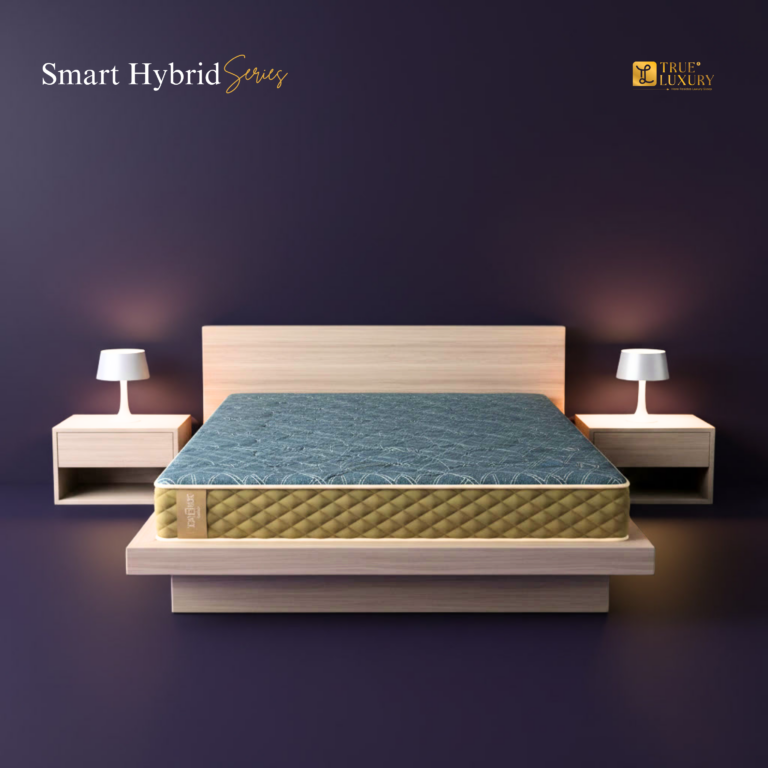
What is new is the number of distinct jobs a modern mattress asks its layers to do. The Dual Hybrid, for instance, lists five separate layers: temperature-sensitive memory foam, super soft quilted PU foam, a super bouncy soft-feel layer, 5-zone high density foam, and high resilience foam underneath. Each layer handles one thing — surface feel, pressure relief, zoned support, structural resilience — rather than one material compromising across all four.
The practical takeaway when you are shopping: “memory foam mattress” tells you almost nothing on its own. Ask what sits above it and what sits below it. A thin comfort layer over a poor core will soften in a year; a well-sequenced stack is what holds its shape.
Zoning: support that changes along your body
Your body is not evenly weighted. Hips and shoulders press deeper than the lower back, which is why a uniformly firm surface can leave a gap under the lumbar curve, and a uniformly soft one lets the hips sink. Zoning is the response — the core is engineered with different support values along its length so heavier regions get more resistance and shoulders get more give.
You will now see this specified numerically. The Springy Hybrid uses a 3-zone sheet spring hybrid system. The Dual Hybrid uses 5-zone hybrid support. The Nature Sense and Latex Hybrid both run 7-zone natural latex.
More zones is not automatically better — it is a design choice, and the material carries as much weight as the count. What zoning genuinely helps with is spinal alignment for side and back sleepers, which is why these models are positioned for posture support and pressure relief rather than plush softness alone.
Cooling stopped being a luxury feature
This is the most India-specific shift on the list. In a climate where a large part of the year is spent above 30°C, heat retention is not a minor complaint — it is the reason people wake at 3 a.m. and blame the mattress without knowing why. Manufacturers have responded at three different levels of the build.
- The fabric — the Cool Hybrid uses a Cool Sense Yarn fabric in a very heavy GSM, aimed squarely at hot sleepers and people who sweat during sleep. The Auto Sense takes the natural route with a bamboo yarn heavy GSM fabric.
- The foam itself — Posture Sense is built on a charcoal-infused HR foam core with a high-airflow construction, pairing freshness with orthopaedic S-curve support.
- The core material — natural latex is breathable by nature, which is why Nature Sense is described as delivering naturally cool sleep, and why spring-based builds like Bonnel Sense lean on an enhanced airflow design through the coil layer.
If you sleep hot, this is the section of the specification sheet to read first. It matters more to your night than the brand name on the label.
One mattress, two firmness levels
The last shift is the most quietly useful. Across the Tech Sense Series — Posture Sense, Sleep Sense, Pocket Sense, Nature Sense, Bonnel Sense — the construction is listed as “one side soft and one side hard”. Cool Hybrid and Dual Hybrid do the same, with Dual Hybrid explicitly reversible: soft on one face, firm orthopaedic support on the other.
For an Indian household this solves two real problems at once. Couples rarely agree on firmness, and a reversible mattress lets one purchase serve both preferences over time rather than forcing a compromise on day one. It also gives you a second option if your needs change — or simply as your preference shifts over the years.
What to check before you buy
Features are easy to list and harder to verify. Three things worth confirming on any mattress you are considering:
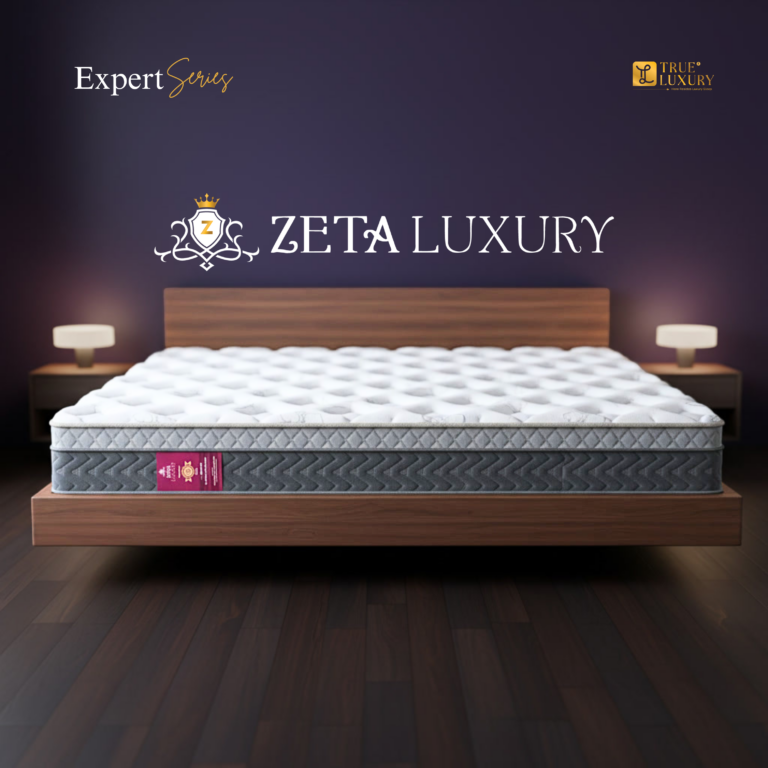
- The stated warranty, model by model. It varies more than people expect. Within the TrueLuxury range alone, warranty terms run from 5 years on Classic Series models like Royal Ortho and Silver Bond, to 7 years on Golden Leaf and Galaxy Plus, 8 years on the Expert Series spring models, and 11 years across the Tech Sense, Smart Hybrid and Wealthy Series. Never assume the warranty from one model applies to another in the same catalogue.
- Thickness options. Most Tech Sense models are offered in 6″, 8″ and 10″; the Smart Hybrid models in 8″ and 10″. Thickness changes both feel and price, so compare like with like.
- Authenticity. TrueLuxury mattresses carry a unique QR code used for originality verification and warranty registration. Scan it at delivery, not two years later when you need to make a claim.
The broader point is that mattress specifications in India have become genuinely informative. A decade ago there was little to compare beyond price and firmness. Today the spec sheet tells you what the mattress is actually built to do — provided you read it.